Service
Water in a crawl space, Olympia
A crawl space is where leaks wait. Water can sit under a floor for weeks before a soft spot or a smell shows it. If you have found standing water or sagging insulation down there, call to be connected with an independent contractor.
Calling soon after you find the water usually leaves more choices. The call goes to an independent contractor.
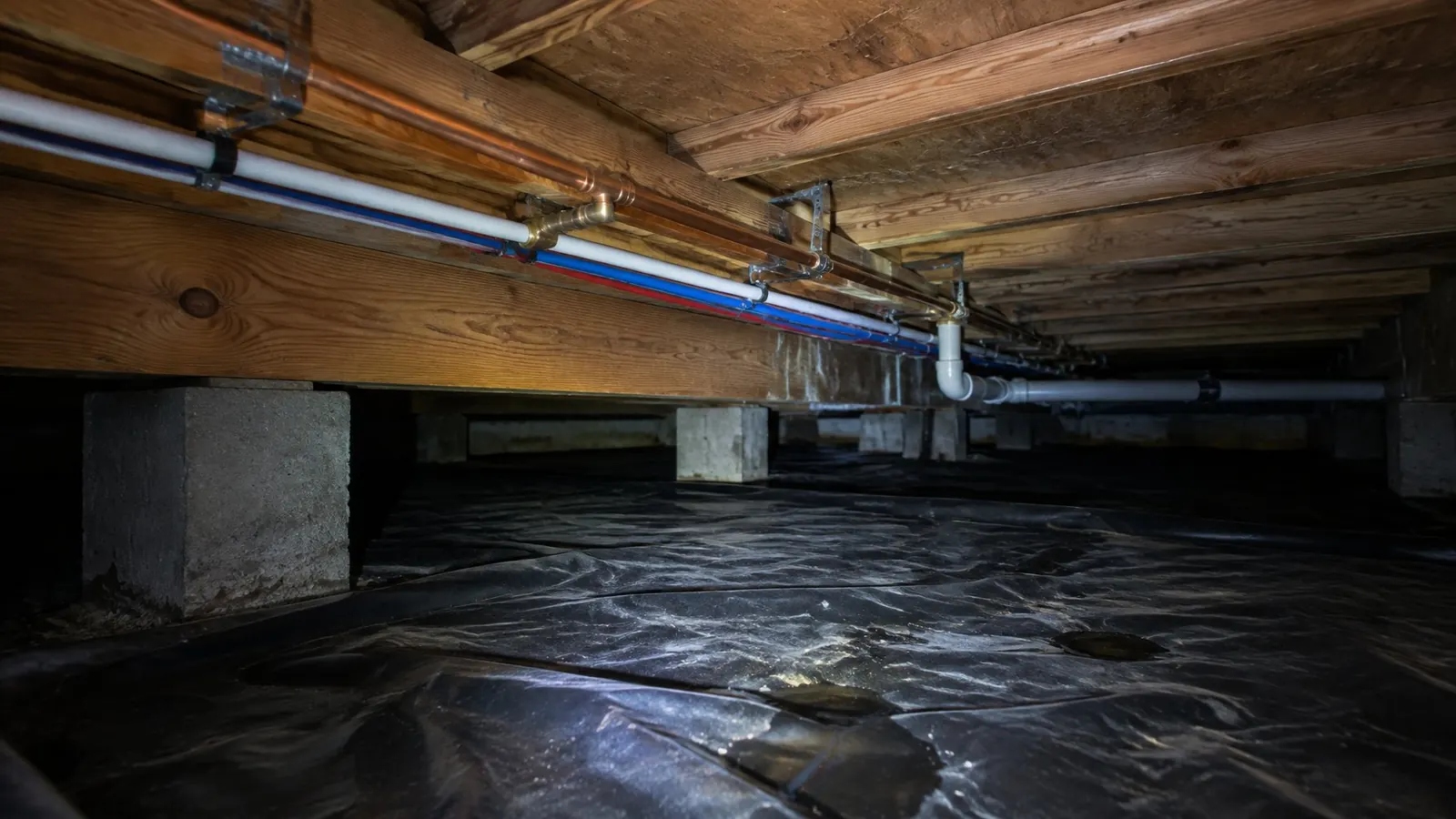
Where the water usually comes from
Water gets into a crawl space from a few common places: a drip from a supply or drain line above, groundwater pushing up after heavy rain, or runoff from a downspout that empties near the foundation.
Which one it is changes the repair. A plumber closes a drip. Drainage, grading and gutters deal with the others, and a restoration contractor handles the wet materials.
- Wet or fallen fiberglass insulation between the joists.
- Dark staining on the underside of the subfloor.
- A musty odor in rooms above the crawl space.
- Floors that feel soft or bounce near a bathroom or kitchen.
The ground cover rule
Washington's residential code section on crawl spaces, WAC 51-51-0408, calls for a ground cover of six-mil black polyethylene or an approved equal over the earth, with exceptions such as a concrete slab.
The plastic you see in a crawl space is that cover. It slows moisture rising from soil. It is not a drain, and it does not stop water coming from above or from the side.
What insurers tend to say
The state insurance regulator says groundwater seeping into a house is not usually covered, and neither are leaking foundations or cracks, which insurers treat as maintenance. A broken pipe above the crawl space is different, because that is a sudden event.
So the cause matters for the claim as well as the repair. See Washington insurance basics.
Questions people ask
Is the black plastic enough to keep the space dry?
It reduces moisture rising from soil. Standing water, a leaking pipe or runoff coming in from the side needs a different fix.
Who looks at a flooded crawl space?
Start with the call number on this page. The contractor will ask where the water came from and what you can see, and will tell you what they do on similar jobs.
Water still spreading? Make the call.
You will be asked what is wet, where the water came from and whether it has stopped. Have the street address in front of you.