Service
Water damage restoration in Olympia, Washington
Restoration is the sequence that follows a water loss: stop the source, remove standing water, dry the structure, then rebuild what could not be saved. Call to be connected with an independent contractor who does that work near you.
Calling soon after you find the water usually leaves more choices. The call goes to an independent contractor.
What the work covers
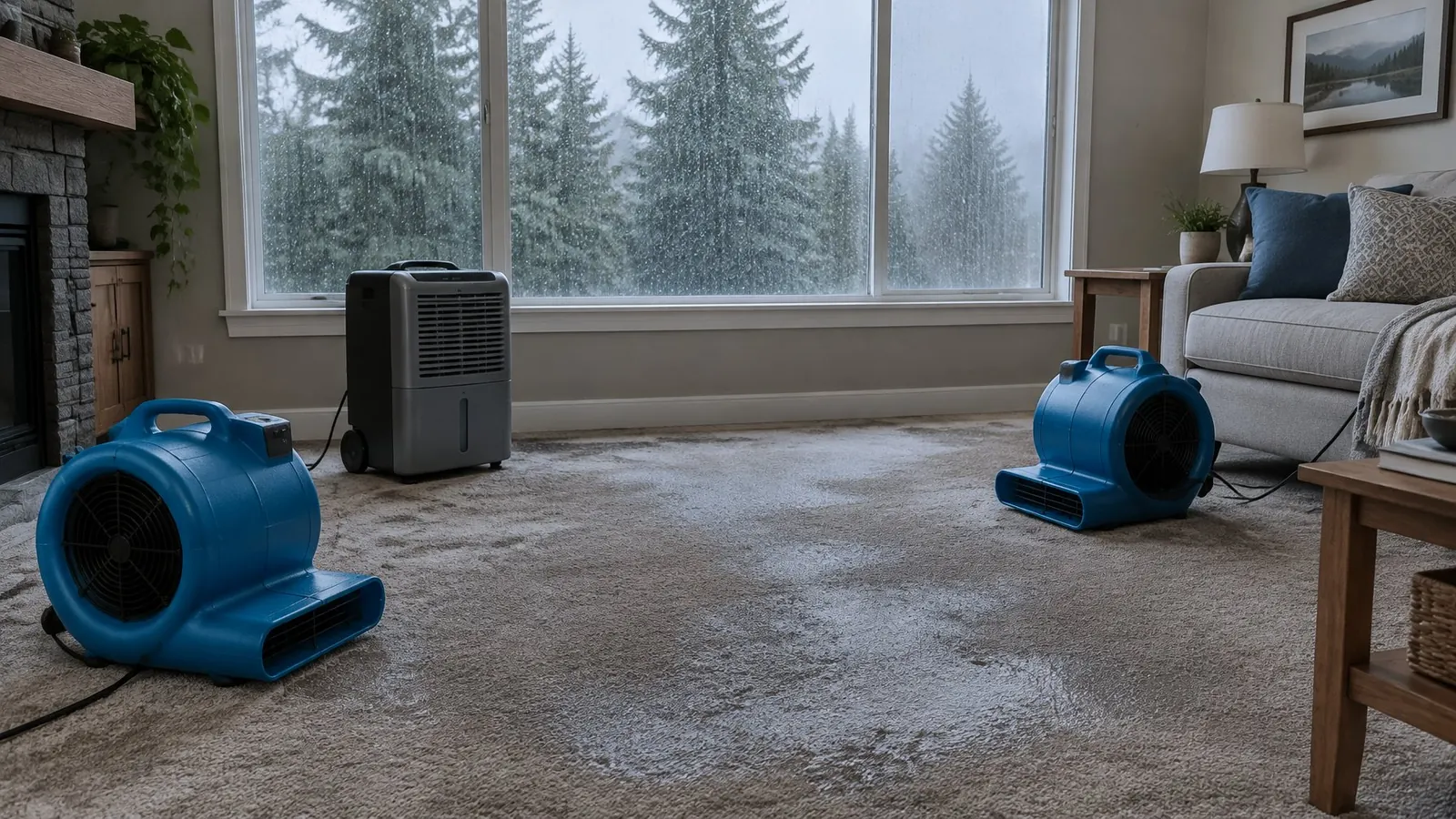
A restoration job is usually split into two parts that are often done by different crews. Mitigation comes first. It limits further damage and dries the building. Reconstruction comes later and replaces flooring, drywall, trim and paint.
Many people only need the first part. A supply line that failed under a sink and was shut off within the hour may need extraction and a few days of drying, with no rebuilding at all.
- Finding where the water went, including behind baseboards and under cabinets.
- Taking out standing water and any materials that cannot be dried in place.
- Running drying equipment and taking moisture readings until the structure reads dry.
- Cleaning and, where needed, removing wet insulation, carpet pad and drywall.
What changes the scope
Three things move a job from small to large: how long the water sat, how clean the water was, and how much of the building it reached. Clean supply water that is caught early behaves very differently from rain that soaked insulation for weeks.
Cost follows scope. It rises with the number of rooms affected, the amount of equipment and days of drying, and the materials removed and replaced. Contractors set their own prices, so ask for the scope in writing before work begins.
Where Olympia houses differ
Water in a house here often travels downward into a floor system you cannot see. Read the crawl space page if your house sits on posts or a short foundation wall. If a pipe froze, the City of Olympia asks you to call Public Works at the meter before the pipe thaws; the frozen-pipe page explains that step.
Renters should also read the page for tenants, because who calls whom is different when the landlord owns the walls.
When you are ready to compare contractors, the hiring guide lists what to check with Washington's Department of Labor and Industries.
Questions people ask
Is restoration the same as mitigation?
Not quite. Mitigation is the emergency part: stopping damage and drying. Restoration is the broader term and can include rebuilding.
Do I need to move out?
That depends on how much of the house is wet and whether power, heat and water are working. Describe the situation on the call and the contractor will say what they see in similar jobs.
Water still spreading? Make the call.
You will be asked what is wet, where the water came from and whether it has stopped. Have the street address in front of you.